Laravel vs. NativePHP: A Detailed Guide for Modern App Development
This article compares Laravel and NativePHP by explaining each technology’s strengths and ideal use-cases. Laravel excels at building structured, scalable web applications — with features like routing, security, database management and scalable backend — while NativePHP enables using PHP to build desktop and mobile apps without learning new languages. By discussing key differences in performance, target project types, and development workflows, the guide helps you choose the right stack based on your project’s requirements.
NativePHP: Build Desktop Applications with PHP
This article introduces NativePHP — a framework that allows developers to build native desktop applications using PHP (and optionally Laravel). It explains how NativePHP packages PHP code into a desktop-compatible environment, giving access to native OS features like windows, menus, notifications and file access. With NativePHP, PHP developers can reuse their existing skills to rapidly create desktop software across Windows, macOS and Linux, making development simpler, faster and more cost-effective.
NativePHP & Mobile Apps: The Future of PHP-Powered Mobile Development
This article explains how NativePHP opens the door for PHP developers to build native mobile applications without learning Java, Kotlin, or Swift. It outlines how NativePHP leverages existing PHP (and Laravel) codebases to create performant, multiplatform mobile apps for iOS and Android — making mobile app development faster, cost-effective and accessible for teams familiar with PHP.
Cookieless Ads and First-Party Data: A Simple Roadmap for Small Businesses
With major browsers phasing out third-party cookies, small businesses must rethink how they collect and use customer data. The shift to a cookieless advertising world emphasizes first-party data — information gathered directly from users with their consent. This data is more reliable, privacy-friendly, and helps businesses build stronger customer relationships. To adapt, small businesses should: Audit existing data sources — identify where and how customer data is collected. Offer value for opt-ins — use transparency and incentives like discounts or guides to encourage signups. Centralize data — organize everything in one CRM for better audience segmentation. Rebuild audiences — use owned data signals such as recent buyers or active subscribers. Adopt cookieless measurement — switch to server-side tracking and conversion APIs for accurate results. Stay compliant — collect only necessary data and maintain clear privacy policies. By focusing on trust and data ownership, small businesses can achieve better engagement, higher conversions, and lower ad costs. The cookieless era isn’t a setback — it’s a chance to build ethical, relationship-driven marketing that lasts.
How to Use AI to Shave Weeks Off a Website Project
How to Use AI to Shave Weeks Off a Website Project Website projects often fall behind due to content delays, design revisions, and approval gaps. AI website development automation helps eliminate these bottlenecks by speeding up research, design, content creation, testing, and deployment. AI tools can quickly analyze competitors, suggest content ideas, and generate wireframes or first-draft copy, allowing teams to move from planning to launch faster. Developers can use AI to build base code structures, while QA teams rely on automation for testing and error detection. After launch, AI monitoring tracks performance and user behavior, ensuring issues are caught early. The key is combining AI’s speed with human creativity and quality control — keeping every project efficient, accurate, and authentic. In essence, AI helps web teams cut project timelines by weeks while maintaining design quality and user experience.
The New Standard for Accessibility and Performance: Building Inclusive Digital Experiences
Accessibility and performance go hand in hand in today’s digital world. A fast website that isn’t accessible leaves users behind, while an accessible one that loads slowly still falls short. True digital success means building inclusive, high-performing experiences that serve everyone effectively. At Web Mavens, we focus on accessible web performance optimization—a process that improves usability, speed, and SEO all at once. From semantic HTML and optimized media to real-world testing and continuous audits, the goal is to create sites that are compliant, fast, and genuinely user-friendly. When accessibility and performance work together, you build trust, strengthen your brand, and future-proof your digital presence for every visitor.
Future-Proofing Enterprise Web Apps: Why Laravel Still Leads in 2025
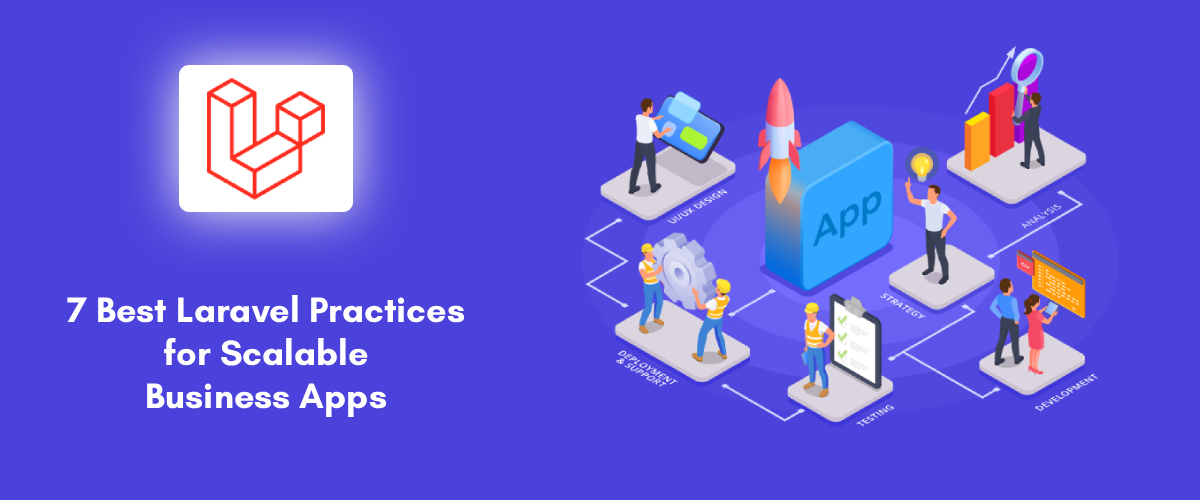
In 2025, Laravel remains a top choice for enterprise web apps thanks to its stability, scalability, and performance. With tools like Octane for speed, Vapor for serverless scalability, and Reverb for real-time features, it helps businesses build secure, future-ready systems. For teams focused on long-term reliability and efficiency, Laravel delivers the balance enterprises need to grow and innovate with confidence.
Web Performance in 2025: How Serverless, Edge Computing, and Motion UI Are Changing User Experience
In 2025, web performance is a product decision that directly impacts conversion, retention, and user satisfaction. Combining serverless edge functions, edge computing for web performance, and Motion UI allows teams to deliver fast, responsive, and visually engaging experiences even on unreliable networks. Edge computing reduces latency for personalization, API aggregation, and asset optimization, while Motion UI guides users and reduces cognitive load when implemented thoughtfully. Performance should be measured with Core Web Vitals and Real User Monitoring (RUM) to ensure real-world improvements. Teams can quickly improve speed by deploying edge functions for lightweight logic, transforming images and videos at the edge, enabling HTTP/3, and refining animations. Performance in 2025 is not just a technical concern—it is a strategic lever for product and marketing success.
Headless CMS and Jamstack: The Future of Scalable, High-Performance Websites
Pairing a headless CMS with Jamstack creates fast, scalable, and secure websites. Content is managed through APIs, while static site generation delivers pre-rendered pages via CDN for top performance and reliability. This setup separates content from code, speeding up updates and enabling reuse across platforms. It’s ideal for brands that need SEO-friendly, high-performance sites without requiring heavy infrastructure. Web Mavens helps teams implement this model—from CMS selection and front-end builds to CI/CD, CDN deployment, and ongoing optimization.
Prefetching and Route Optimization: Quick Wins for React & Next.js Apps
Prefetching and route optimization enhance the performance of React and Next.js apps by loading resources in advance and delivering only what’s needed. These techniques reduce load times, improve Core Web Vitals, enhance user experience, and boost engagement and conversions. Simple tweaks, such as <Link> prefetching, router.prefetch(), and dynamic imports, can yield immediate results.
Front-End Speed Wins: Smart Prefetching for Faster Load Times
Smart prefetching improves website speed by predicting user actions and preloading essential resources, enhancing Core Web Vitals like LCP, FID, and CLS. Unlike naive prefetching, it targets only relevant assets, reducing load times, boosting engagement, and improving conversions. Faster, smoother websites lead to better SEO, lower bounce rates, and measurable business results.
Why Developers Are Choosing Headless CMS: Benefits and Best Practices
Developers are increasingly adopting headless CMS for its flexibility, speed, scalability, and security. By decoupling the backend from the frontend and delivering content via APIs, businesses can deliver consistent, high-performing experiences across multiple channels. Best practices include choosing the right platform, integrating modern frontend frameworks, optimizing for SEO, planning multi-channel delivery, and securing APIs. Headless CMS is a strategic choice for future-proof digital experiences.
Top Email Security Threats in 2025 and How Your Business Can Stay Protected
In 2025, email remains the top entry point for cyberattacks, including AI-powered phishing, business email compromise, QR code scams, ransomware, and account takeovers. Businesses can protect themselves with strong authentication, email security standards, employee training, advanced security tools, and a clear incident response plan. Combining technology and proactive policies greatly reduces risk and prevents costly breaches.
Web Design Trends 2025: Why Accessibility Is No Longer Optional
In 2025, website accessibility is no longer optional—it’s the standard. From ADA compliance to SEO advantages, accessible web design ensures equal access for all users while helping businesses reach wider audiences, avoid legal risks, and improve conversions. This blog explores the key accessibility updates every business must implement now.
Generative Engine Optimisation (GEO): The Future of SEO in 2025
Generative Engine Optimisation (GEO) is reshaping how businesses approach search. With Google’s AI-powered SGE changing user behavior, GEO ensures your brand gets visibility in AI-driven answers. This blog explains what GEO is, why it matters in 2025, and the strategies every business should start using now.